
Western United States · Private investment
Patient capital, creatively invested for the long haul.
We acquire controlling equity in stable, mature, technically complex businesses, without intent to sell.
About us
A long-term, stewardship approach to investing.
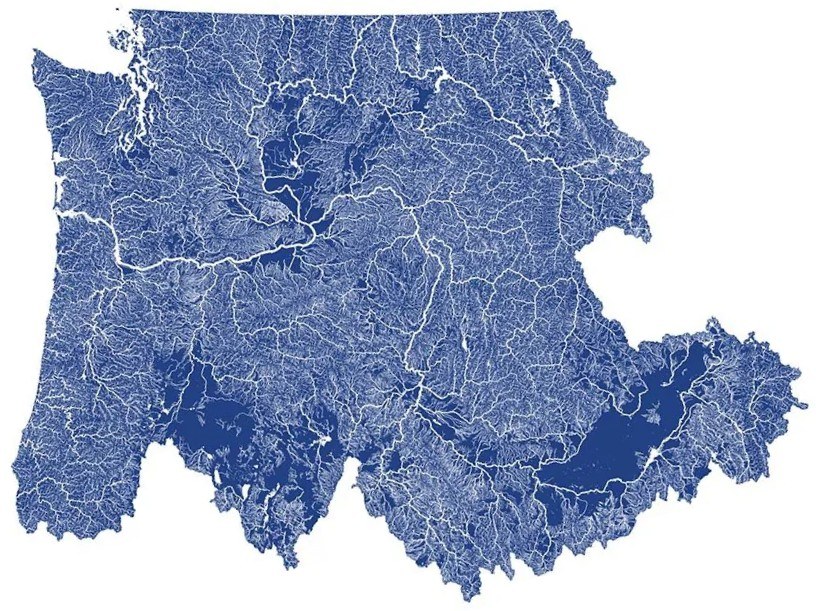
Watershed Holding Company acquires controlling equity in stable, mature, technically complex businesses across the Western United States. Built on a foundation of science and engineering, these businesses — test and measurement instrumentation, precision components, advanced materials — solve problems that others can’t.
-
We have a long time horizon.
The things that make a business valuable — capable people, healthy systems, a trustworthy reputation — take years to build and require constant reinvestment. Because we aim to own indefinitely, our focus is on building those elements, not depleting them for short-term gain.
-
We support independence.
We aren’t a giant competitor looking to fold your business into an organization with competing values. The company keeps its name, its customers, its people, and its essence. It has been successful for a reason.
Core values
-
Integrity
We do what we say we’ll do, every time. No surprises.
-
Curiosity
We ask questions, listen deeply, and seek first to understand.
-
Kindness
We treat people with respect and lead with empathy.
-
Determination
We never give up.

David Working
Managing Partner
David founded Watershed to build on his experiences advising middle-market investors across the Pacific Northwest and Alaska on investment strategy, execution, and management. He has seen firsthand how thoughtful ownership can guide and support a business in transition, and how conflict can destroy it.
David lives just outside of Boise, Idaho with his wife and two boys. Before a career in investing, he began his career at a laboratory benchtop, pursuing tissue engineering research using novel biomaterials. David holds a B.S. in Biomedical Engineering from Washington University in St. Louis and an MBA from Duke University.
Approach
First, do no harm.
We are business builders. The companies we look for already make something that works — proven products, engineering that took years to get right, and customers who would notice immediately if either slipped. The first obligation is to not break any of that.
After that, we focus on systems and foundations, slowly but surely. Since we are not preparing a business for somebody else’s diligence in three years, the work tends to be unglamorous, cumulative, and effective.
In roughly this order:
-
Information systems
Financial and operational data are knowledge. Clear, accessible information provides a foundation of truth for every part of the business.
-
Mission alignment
A goal is only useful if the floor and the front office describe it the same way. We spend real time establishing where the business is going, then making sure day-to-day execution actually points that direction.
-
Human capital development
Complexity almost always arrives before the org chart is ready for it. We would rather hire ahead of the curve and develop the people already in the building than wait for something to break and then call the repair a reorganization.
Investment criteria
What we look for.
These are proxies for our interest, but not strict boundaries. If a business is close but not exact, it is still worth a conversation.
Western United States. Bonus points for Washington, Oregon, or Idaho.
$3–15M EBITDA on $20–100M of revenue.
Stable, mature operating businesses. Not early-stage, and not turnarounds.
Controlling equity. We are glad for an owner or management team to keep a meaningful stake and stay involved.
Technically complex manufacturing: test and measurement instrumentation, precision components, advanced materials. Applications across industries: aerospace, automotive, defense, energy, life sciences, and everything in between. The list describes where we have built literacy, not a fence. Adjacent to it, ask us.
No predetermined exit timeline. We buy to hold.
Where we’re a poor fit
Companies followed by a long string of litigation; companies whose value depends on a deep, immediate cultural turnaround; any situation where the plan requires stripping the operation to make the numbers work. We would rather say so in the first conversation than spend a few months getting to the same answer.
Content
Field Notes.
Short briefs on what we are seeing in the subsectors we follow. Written with intent to share our learnings, for readers already embedded. Every figure is footnoted.
-
The Great Skill Shortage
The connector, the cable, and the sensor can be bought; the experienced judgment that turns them into a differentiated product can’t.
Read the brief → -
The Moat Is Also a Fence
The qualification that makes a proprietary material impossible to displace also makes it very difficult to improve.
Read the brief → -
The Backlog Is Not Your Friend
Structural demand tailwinds in aerospace components are real—but the distance between “the market is growing” and “we are growing profitably” is where the hard work lives.
Read the brief →
Field Notes, in your inbox.
Periodically, when there is something worth sending. Nothing else, and one click to stop.
Contact us
Let’s compare notes.
We are always learning a new corner of this market and happy to trade observations with anyone else engaged — owners, operators, and advisors alike. No agenda beyond that.
- Email contact@watershedholdco.com
- LinkedIn Watershed Holding Company
Thanks — now grab a time.
Half an hour, no preparation needed. If nothing here works, reply to the confirmation email and we will find something.
Rather book straight away?
Open the calendar